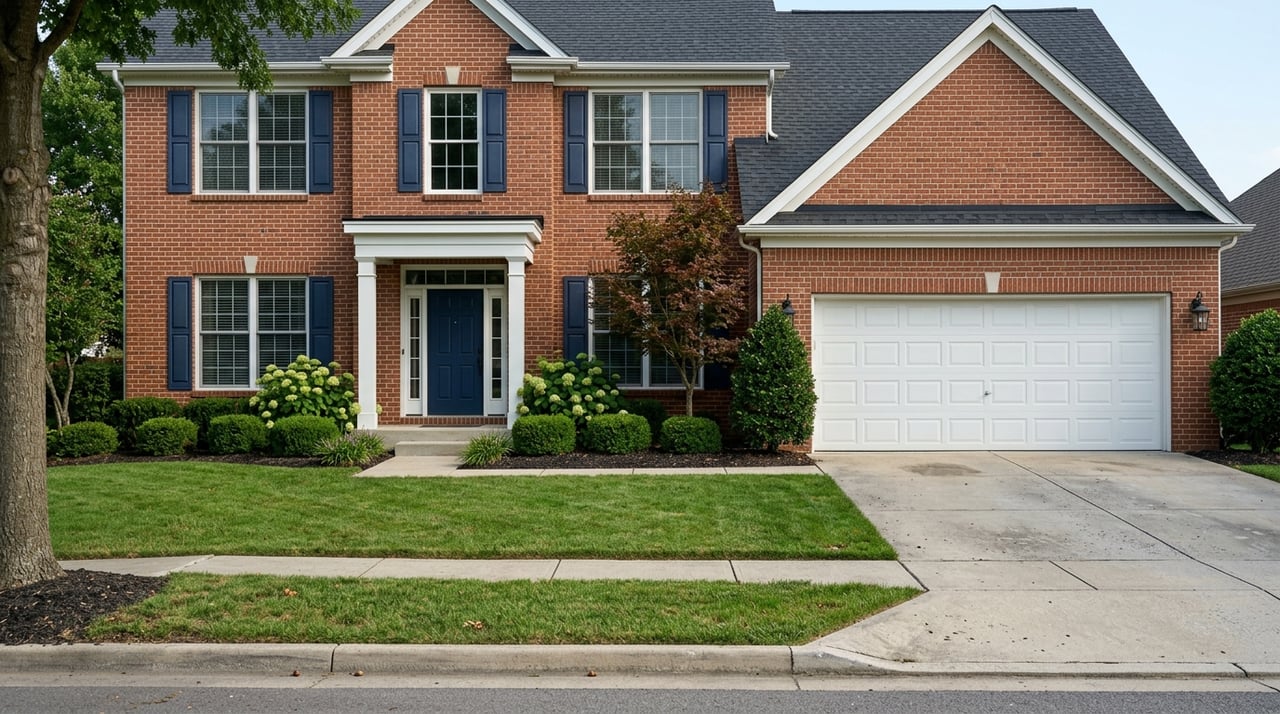
Short Pump New vs Resale Homes: How to Choose
July 2, 2026
July 2, 2026
Buying in Short Pump often comes down to one big question: do you want the shine of something brand new, or the flexibility that often comes with a resale home? If you are trying to balance budget, timing, lot size, and long-term fit, that choice can feel more complicated than it looks. The good news is that the current Short Pump market gives you some clear patterns to work with. Let’s break down how new and resale homes compare so you can make a smarter move.
Short Pump remains an active market, with 144 homes for sale, a median listing price of $590,000, a median sold price of $538,000, and a median 28 days on market as of May 2026. Redfin also shows a median sale price of about $530,033 for all home types in May 2026. That gives you a helpful baseline before you compare home styles and price ranges.
One of the biggest themes in today’s market is that detached new construction tends to sit well above the overall median, while many resale single-family homes track much closer to it. If your target budget falls in the range where many West End and Henrico buyers shop, that difference matters right away.
Current detached new-construction examples in Short Pump are listed around $936,290, $982,850, $997,820, $1,032,000, $1,389,950, and $1,725,000. That is a very different price band from the overall market median. It also helps explain why many buyers are surprised when they first compare new single-family homes to resale options nearby.
There are lower-priced new homes in the broader Short Pump pool, including condo and townhome-style options around $390,950 to $429,990. If you are comparing detached homes only, make sure you separate attached products from the search. Otherwise, the price gap can look smaller than it really is.
Many current new-build homesites are compact. Examples include lots around 9,148, 9,191, and 9,583 square feet, or roughly 0.21 to 0.22 acre, along with some larger homesites around 0.269, 0.35, and 0.38 acre.
That does not mean a new home lacks outdoor appeal. Some communities highlight private rear yards with natural buffers, while others include association-managed lawn care and amenities like a pool and clubhouse. The tradeoff is usually less lot variety and a more structured community setup.
If you love modern layouts and newer materials, new construction has clear appeal. Current listings highlight quartz countertops, gas cooking, stacked cabinetry, pendant lighting, oversized islands, open floor plans, private studies, and guest suites.
Some to-be-built homes may also allow you to personalize structural or design selections. That can be a real advantage if you want a home tailored to your preferences from day one.
Timing is one of the most important differences. New construction often takes about 6 to 12 months from contract to move-in, though spec homes may close faster and custom builds may take longer.
If you need to move quickly, that timeline may be a challenge. If your timing is flexible, the wait may feel worthwhile for a cleaner condition profile and newer finishes.
Current resale-style single-family examples in Short Pump include homes listed at $529,950, $550,000, and $775,000. While resale prices can still climb based on location, updates, and lot size, they often sit much closer to the broader Short Pump median than detached new construction does.
For many buyers, that creates more room to compare tradeoffs. You may be able to choose between condition, yard size, location, and monthly costs without stretching into the top end of the market.
Lot size is one of the strongest reasons some buyers lean toward resale. Current examples include lots around 0.42 acre and 0.46 acre, which are already larger than many of today’s new-build homesites.
Older neighborhoods may also offer cul-de-sacs, mature landscaping, and a different streetscape feel. That variety can be especially valuable if outdoor space is high on your list.
Resale homes often come with more personality, but also more variation. Current listings mention features like updated crawlspace work, formal dining rooms, cathedral ceilings, brick front porches, marble floors, two-story foyers, and gas fireplaces.
That mix can be a plus if you want character or a home that does not feel like every other listing in the neighborhood. At the same time, you should be ready to evaluate age, maintenance, and future replacement costs for major systems.
Even a well-kept resale home can come with upcoming expenses. Roofs, HVAC systems, windows, flooring, and crawlspace conditions can all affect your real cost after closing.
That does not make resale a worse choice. It simply means your inspection and document review matter even more, especially if you are comparing an older home to a new one with builder warranties and brand-new systems.
Whether you choose new construction or resale, HOA details deserve close attention. In current Short Pump new-construction examples, HOA charges range from $75 per month to $291 per month. That is a wide spread, and it shows how much the monthly cost can depend on amenities and maintenance coverage.
Some communities may include lawn care, pools, clubhouses, or other shared features. Others may be more limited. Before you fall in love with a home, ask exactly what the dues cover and whether there are additional community rules or costs that affect your day-to-day life.
If you buy a resale home in a Virginia common interest community, the Resale Disclosure Act comes into play. The seller must obtain a resale certificate from the association and provide it to you. The association generally has 14 days to deliver it after a written request.
The Code of Virginia also gives purchasers cancellation rights tied to delivery of that resale certificate, and buyers may request an updated certificate before settlement. In practical terms, that means HOA paperwork is not just routine. It is an important part of your decision-making and timeline.
Henrico County also provides an HOA Lookup tool that shows HOA boundaries and links to association records. That can help you confirm whether a home is in an association before you write an offer.
The right choice usually becomes clearer when you ask better questions early. A few smart questions can save you from budget surprises or timeline stress later.
A new home may be the better fit if you want modern finishes, less immediate maintenance, and a cleaner overall condition profile. It can also make sense if you are comfortable paying a premium for newer product and can wait through the construction timeline.
In Short Pump, this path often fits buyers who prioritize turnkey living over lot size or entry price. It is especially important to watch upgrade costs, lot premiums, and monthly HOA dues so your budget stays realistic.
A resale home may be the better fit if you want faster occupancy, more price variety, or a larger lot. It can also be the stronger choice if you want to stay closer to Short Pump’s typical single-family pricing instead of jumping into the top tier of the market.
For many buyers in the West End, resale creates more options across budget, neighborhood setting, and yard size. The tradeoff is that you need to look more carefully at condition, maintenance history, and HOA paperwork when applicable.
In today’s Short Pump market, new construction usually means newer finishes, limited detached inventory, and higher pricing. Resale usually means more lot diversity, a wider range of price points, and a faster move-in path. Neither option is automatically better.
The best choice depends on what matters most to you: price, timing, maintenance, outdoor space, or customization. If you want help weighing those tradeoffs in real neighborhoods and price bands, Terri Brennan offers the local guidance and hands-on support that can make the decision feel much clearer.
Stay up to date on the latest real estate trends.


Get assistance in determining current property value, crafting a competitive offer, writing and negotiating a contract, and much more. Contact me today.